

As a supplier of Power Station Feed Pumps, I am often asked about the main components that make up these crucial pieces of equipment in a power generation setup. In this blog post, I will delve into the key components of a power station feed pump and explain their functions and significance.
Impeller
The impeller is the heart of the power station feed pump. It is a rotating component with curved blades that converts the mechanical energy from the pump's motor into kinetic energy of the fluid. As the impeller rotates at high speed, it sucks in the feedwater from the inlet and throws it outwards towards the pump's volute or diffuser. The design of the impeller blades is crucial as it determines the pump's efficiency, flow rate, and head. A well - designed impeller can increase the overall performance of the feed pump, ensuring a smooth and efficient flow of water through the power station's boiler.
Casing
The casing is the outer shell of the pump that encloses the impeller. It has two main functions. Firstly, it collects the fluid discharged by the impeller and converts the kinetic energy of the fluid into pressure energy. The casing is designed in such a way that it gradually increases the cross - sectional area as the fluid moves towards the outlet, which helps in reducing the fluid's velocity and increasing its pressure. Secondly, the casing provides mechanical support and protection to the internal components of the pump. It is usually made of high - strength materials such as cast iron or steel to withstand the high pressures and temperatures inside the pump.
Shaft
The shaft is a long, cylindrical component that transfers the rotational power from the motor to the impeller. It is connected to the motor at one end and the impeller at the other. The shaft must be strong enough to transmit the torque without bending or breaking under the load. It is usually made of high - quality steel and is precisely machined to ensure smooth rotation. To prevent leakage of the fluid along the shaft, mechanical seals are used. These seals are designed to provide a tight seal between the rotating shaft and the stationary parts of the pump, minimizing the loss of water and preventing contamination.
Bearing
Bearings are essential components that support the shaft and allow it to rotate smoothly with minimal friction. There are two main types of bearings used in power station feed pumps: radial bearings and thrust bearings. Radial bearings support the radial load (perpendicular to the shaft axis) applied to the shaft, while thrust bearings support the axial load (along the shaft axis). High - quality bearings made of materials such as bronze or rolling - element bearings are used to ensure long - term reliability and durability. Proper lubrication of the bearings is also crucial to reduce friction and prevent wear and tear.
Seal Chamber
The seal chamber is an important part of the pump where the mechanical seal is located. It provides a controlled environment for the mechanical seal to operate effectively. The seal chamber is typically filled with a sealing fluid, which helps to cool and lubricate the mechanical seal. It also helps to prevent the ingress of dirt and other contaminants into the seal, ensuring its proper functioning. The design of the seal chamber must be carefully considered to ensure that it can handle the high pressures and temperatures encountered in a power station environment.
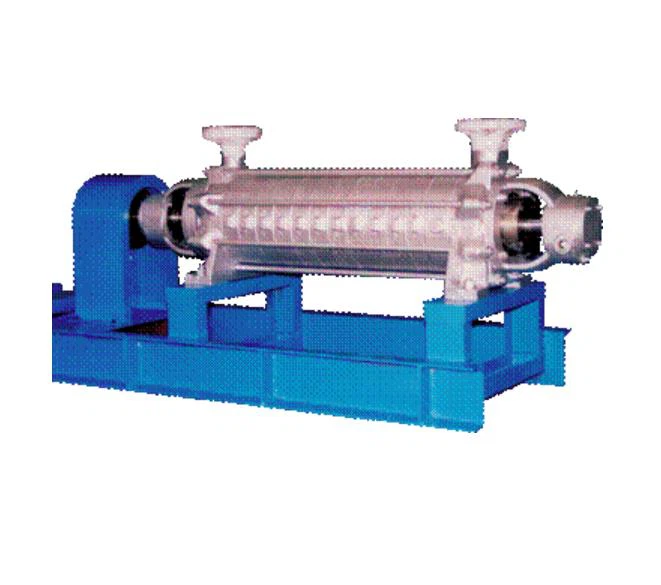

Suction and Discharge Pipes
The suction and discharge pipes are responsible for connecting the pump to the rest of the power station's piping system. The suction pipe is where the feedwater enters the pump, and it is designed to minimize the resistance to fluid flow. A properly designed suction pipe can prevent the formation of air pockets or cavitation, which can damage the pump. The discharge pipe, on the other hand, carries the high - pressure water from the pump to the boiler or other parts of the power station. It must be able to withstand the high pressures generated by the pump and be properly sized to handle the required flow rate.
Coupling
The coupling is used to connect the pump shaft to the motor shaft. It transmits the rotational power from the motor to the pump while allowing for some misalignment between the two shafts. Flexible couplings are commonly used in power station feed pumps as they can compensate for minor misalignments and vibrations. This helps to reduce the stress on the shafts and bearings, improving the overall reliability and lifespan of the pump.
Control System
A modern power station feed pump is usually equipped with a sophisticated control system. This system monitors and regulates various parameters such as flow rate, pressure, temperature, and motor speed. It ensures that the pump operates within its design limits and can adjust the pump's performance in response to changes in the power station's demand. For example, if the load on the power station increases, the control system can increase the pump's speed to supply more feedwater to the boiler.
In addition to these components, power station feed pumps are often part of a larger system that includes other important equipment. For instance, they work in conjunction with Power Station Circulating Pump, which is responsible for circulating water through the condenser to remove heat. They also interact with Power Station HP and LP Heater to pre - heat the feedwater before it enters the boiler, improving the overall efficiency of the power generation process.
At our company, we understand the importance of high - quality power station feed pumps in the efficient operation of power plants. Our Power Station Feed Pump is designed and manufactured with the highest standards of quality and reliability. We use the latest technology and materials to ensure that our pumps can meet the demanding requirements of modern power stations.
If you are in the market for a reliable power station feed pump or have any questions about our products, we invite you to contact us for further information and to discuss your specific procurement needs. Our team of experts is ready to assist you in selecting the right pump for your power station and providing you with the best possible solutions.
References
- "Pump Handbook", by Karassik, I. J., Messina, J. P., Cooper, P. T., & Heald, C. C.
- "Power Plant Engineering", by Peacock, W. G.


