

Hey there! As a supplier of Lithium Titanate Batteries, I often get asked about the energy density of these amazing power sources. So, let's dive right in and break it down.
First off, what exactly is energy density? Well, in simple terms, it's a measure of how much energy a battery can store in a given volume or mass. For us battery folks, it's a super important metric because it determines how long a battery can power a device and how compact it can be.
Lithium Titanate Batteries, or LTO batteries for short, have some unique characteristics when it comes to energy density. Compared to other types of lithium - ion batteries, like Lithium Cobalt Oxide (LiCoO₂) or Lithium Iron Phosphate (LiFePO₄) batteries, LTO batteries generally have a lower volumetric and gravimetric energy density.
Volumetric energy density refers to the amount of energy stored per unit volume. For LTO batteries, this value is typically in the range of 100 - 150 Wh/L. In contrast, LiCoO₂ batteries can have a volumetric energy density of around 250 - 700 Wh/L. Why is the LTO energy density lower? It mainly boils down to the chemistry of the battery. The structure of the lithium titanate anode in LTO batteries takes up more space compared to other anode materials, which means there's less room for storing energy within the same volume.
Gravimetric energy density, on the other hand, is the energy stored per unit mass. LTO batteries usually have a gravimetric energy density of about 60 - 100 Wh/kg. Again, LiCoO₂ batteries outperform LTO in this aspect, with values ranging from 150 - 250 Wh/kg. The relatively lower gravimetric energy density of LTO batteries is due to the fact that the lithium titanate material is heavier compared to some of the alternative anode materials used in other lithium - ion batteries.
But hey, don't be too quick to write off LTO batteries just because of their lower energy density. They come with a bunch of other awesome features that make them a great choice in many applications.
One of the biggest advantages of LTO batteries is their extremely long cycle life. They can endure thousands, and in some cases, tens of thousands of charge - discharge cycles. This is a game - changer for applications where the battery needs to be used repeatedly over a long period, like in electric buses, grid energy storage systems, and industrial equipment.
Another great thing about LTO batteries is their high - rate charge and discharge capabilities. They can be charged and discharged at very high currents without significant degradation. This makes them ideal for applications that require rapid charging or high - power output, such as electric vehicles during acceleration or regenerative braking.
LTO batteries also have excellent thermal stability. They can operate safely over a wide temperature range, from - 30°C to 55°C. This is a huge plus in harsh environments where temperature fluctuations are common.
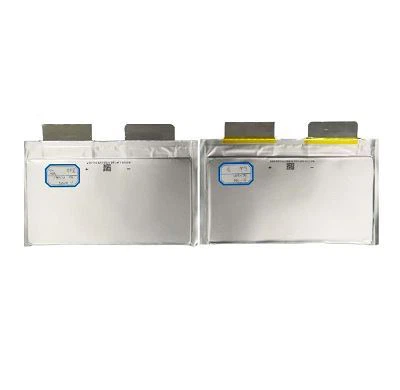
Now, if you're interested in our Lithium Titanate Batteries, we have some great single - cell models to offer. Check out our Lithium Titanate Battery Single Cell Model LTT75 and Lithium Titanate Battery Single Cell Model LTT95. These models are designed to meet the diverse needs of different applications, whether it's for small - scale consumer electronics or large - scale industrial projects.
If you're in the market for high - performance Lithium Titanate Batteries, I encourage you to reach out for a procurement discussion. We can work together to find the best battery solution for your specific requirements. Whether you need a battery with a certain energy density, cycle life, or charge - discharge rate, we've got you covered.
In conclusion, while the energy density of Lithium Titanate Batteries may not be as high as some other lithium - ion battery types, their unique combination of long cycle life, high - rate capabilities, and thermal stability make them a top choice for many applications. So, don't hesitate to get in touch and see how our LTO batteries can power your next project.

References
- "Lithium - Ion Batteries: Science and Technologies" by Yoshio Matsuda, Akiya Kanno, and Masaki Yoshio.
- Journal of Power Sources articles related to Lithium Titanate Batteries.


